

Educated
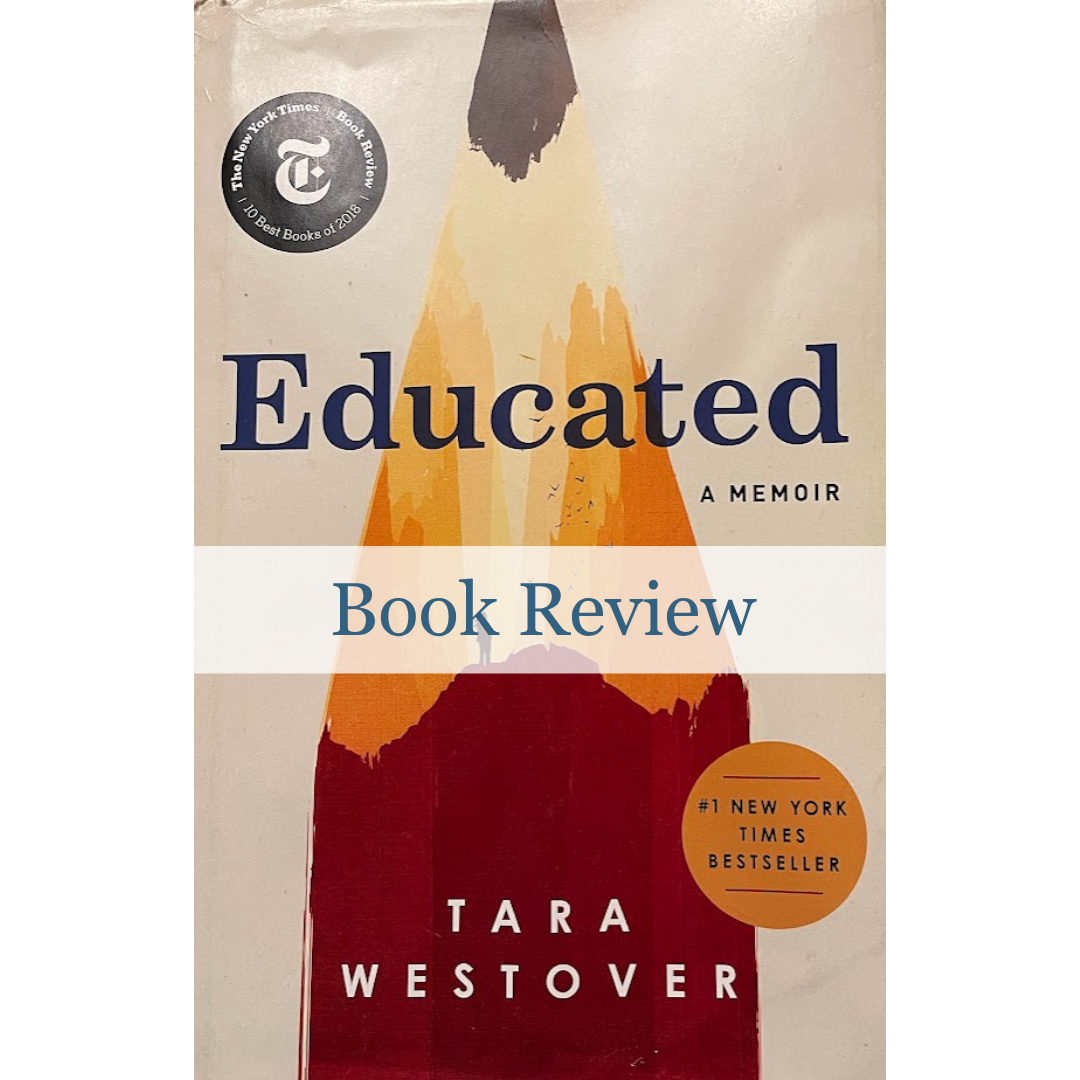
By Tara Westover
Tara Westover, author of the New York Times bestseller Educated: A Memoir, shares her experience of pursuing an education against all odds while growing up in the mountains of Idaho with survivalist parents. While other kids attended school, Westover and her six siblings prepared for the End of Days, hoarding food and packing bags filled with supplies, ready to flee at a moment’s notice. She and her family earned money by working in their father’s dangerous junkyard, salvaging metal. Westover’s mother helped support the family as a midwife, herbalist, and eventually an “energy worker” despite her husband not believing women should work.
Her father’s deep distrust of the government and medical establishment extended to public education. She writes, “Dad said public school was a ploy by the Government to lead children away from God. ‘I may as well surrender my kids to the devil himself,’ he said, ‘as send them down the road to that school’” (5). Despite this, Westover’s parents did not provide a homeschooling education either.
For the most part, Westover educated herself with her brother’s encouragement, an ACT study guide, and an algebra textbook. At age 16, she passed the ACT and attended Brigham Young University where she confronted other challenges. Students did not want to befriend her due to her lack of hygiene (she and her family did not even wash their hands with soap), understanding of basic study skills, and knowledge of history (Westover had little to no knowledge of slavery, the civil rights movement, the Great Depression, and the Holocaust). Despite hardship, Westover graduated and was awarded a Gates Cambridge Scholarship. She earned an MPhil from Trinity College in Cambridge and a PhD in history. She was also a Harvard University visiting fellow. Formal education provided Westover a new understanding of herself, the world, and her father.
Educated is a remarkable and beautifully written memoir. Westover brings us into her intense grief and internal conflict as she tries to reconcile family loyalty with autonomy and truth. Her inspiring story of courage teaches readers to persevere and reminds us of the value of education.
Seven insights on courage from Educated
1) Courage reminds us that just because we might not have been ready the first time around, there is still hope that we may make a different choice.
Westover writes:
On one such morning, as I sat at the counter watching Grandma pour a bowl of cornflakes, she said, “How would you like to go to school?”
“I wouldn’t like it,” I said.
“How do you know,” she barked. “You ain’t never tried it” (6).
2) Courage invites us to talk to different types of people and explore new ideas.
“I’d never learned how to talk to people who weren’t like us—people who went to school and visited the doctor. Who weren’t preparing, every day, for the End of the World” (85-86).
“My love of music, and my desire to study it, had been compatible with my idea of what a woman is. My love of history and politics and world affairs was not. And yet they called to me” (228).
3) Courage invites us to be honest with ourselves.
“I shrank from this frightening image of the doctor and his corrupt medicine, and only then did I understand, as I had not before, that although I had renounced my father’s world, I had never quite found the courage to live in this one. I flipped through my notebook to the lecture on negative and positive liberty. In a blank corner I scratched the line, None but ourselves can free our minds. Then I picked up my phone and dialed. ‘I need to get my vaccinations,’ I told the nurse” (258).
4) Courage invites us to listen to the encouragement of others when it’s hard to believe in ourselves.
“‘It’s time to go, Tara,’ Tyler said. ‘The longer you stay, the less likely you will ever leave’” (120).
Dr. Kerry smiled. “You should trust Professor Steinberg. If he says you’re a scholar—'pure gold,’ I heard him say—then you are” (242).
5) Courage invites us to recognize that our feelings are complicated and we can feel two things at once.
“The truth is this: that I am not a good daughter. I am a traitor, a wolf among sheep: there is something different about me and that difference is not good….We both know that if I ever again find Shawn on the highway, soaked in crimson, I will do exactly what I have just done. I am not sorry, merely ashamed” (147).
6) Courage invites us to take back our power.
“‘It’s strange how you give the people you love so much power over you,’ I had written in my journal” (198).
“I shed my guilt when I accepted my decision on its own terms, without endlessly prosecuting old grievances, without weighing his sins against mine. Without thinking of my father at all. I learned to accept my decision for my own sake, because of me, not because of him. Because I needed it, not because he deserved it” (328).
7) Courage invites us to leave unhealthy relationships to allow room for healthy ones.
“During the drive back, my aunt Debbie invited me to visit her in Utah. My uncle Darryl echoed her. ‘We’d love to have you in Arizona,’ he said. In the space of a day, I had reclaimed a family—not mine, hers” (325).