


Posted Oct. 3, 2023 (Updated Nov. 1, 2026)
“I would recommend taking this class again,” the teacher said to me as the sewing class wrapped up.
I could feel eyeballs burning through my skull while I bowed my head in embarrassment and retreated to my car.
Because I had mentioned I wanted to try my hand at sewing, my family had pitched in to get me a sewing machine that Christmas. I knew nothing about sewing machines, but it looked like they had spared no expense. I better put this thoughtful gift to good use, I thought, so I registered for a “Know Your Machine Class” at a sewing studio a couple of towns over.
When I arrived, we went around the room to introduce ourselves.
“I’m making my prom dress,” a teenager mentioned.
Each person who followed shared a project they were working on. It quickly became clear that, although their sewing machines might’ve been new to them–perhaps an upgrade from a beginner set or their first machine after spending time hand-sewing–they weren’t novices like me.
The teacher rattled off instructions on how to thread the machine. Now we would do it on our own. My classmates seemed to easily master the steps, while I quickly fell behind. Wait, where do I carry the thread over to again? Was I supposed to do this after that? I referred to my shorthand notes on scrap paper, but with my classmates and teacher watching me (a recipe for disaster for my highly sensitive soul), my nerves had rattled down to my hand, rendering the cheat sheet illegible.
The instructor continued to remind me of the steps, and I imagine I had the machine’s instruction book there, too. Still, I couldn’t recall the order. My mind was like a sieve, a point my husband would argue, since he tells people how I remember conversations from years ago, including the date and words exchanged. But my brain files relationship information more easily. Machines were different; those details scattered across my mind’s floor with no file folder in sight.
My eyes filled with tears from humiliation and frustration. Why can’t I get it? Failure stings.
I returned home and never took the machine out again, except to take the photo above. It remains downstairs in my basement on a craft cabinet collecting dust, its insides gunked up from age and disuse. I wanted to learn, but apparently, my giant-sized humiliation outweighed any snack-sized interest.
This technically wasn’t my first failed sewing foray, although it had been decades. In elementary school, our class had to stitch the outline of our state (New Hampshire), state flower (lilac), and state tree (birch). My best friend’s creation was perfect as usual, thanks to her natural artistic flair. Mine? Not so much.
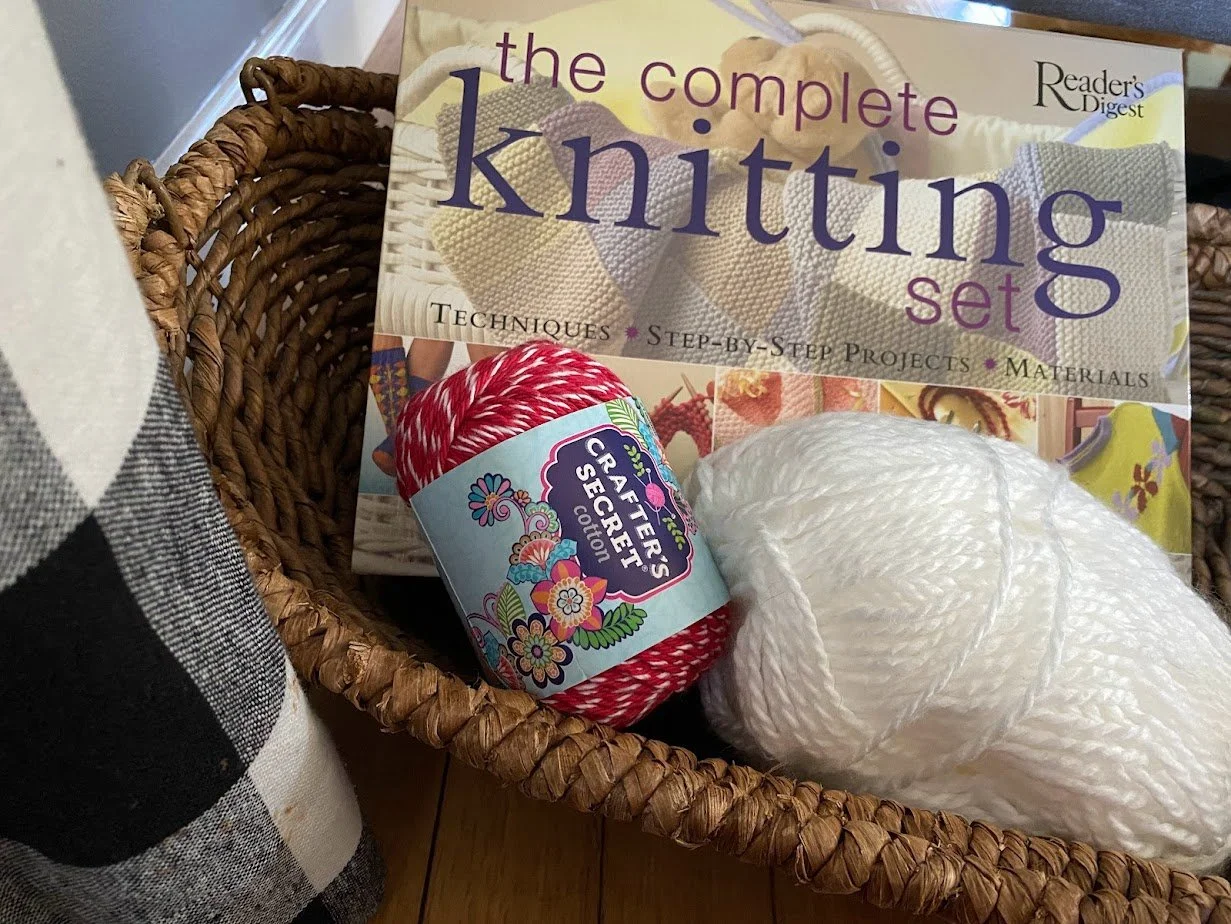
I am a quilt of repeating patterns when it comes to failure in home economics. Knitting was also a no-go for me, despite my sister’s stellar instruction, a handy Reader’s Digest learn-to-knit kit, and adorable spools of yarn begging to be used. I also had a run-in with a hand-me-down bread machine from my mother-in-law. Somehow, all that formed was liquid goo. I fell to the kitchen floor in tears. Maybe I was hopeless. Neither the knitting needles nor the bread machine have been invited back to play.
I’ve thought about why those failures in particular hit so deeply; perhaps it’s because they challenged an unconscious idea I held of what it means to be a woman.
The women in my family all effortlessly sew, knit, quilt, or cook, but these activities don’t feel natural or particularly enjoyable to me.
In “What Exactly Do We Learn From Failure?” by Radu Atanasiu Ph.D., in Psychology Today, Atanasiu points to three things we need to ask ourselves about failure: “what assumption proved not to be true, what is true instead, and what do we need to do about it.” He breaks this down into three clear statements: “Before the failure, I thought that (…), but then I realized that (…); now, I do (…).”
So what is true for me? I’m enough as I am, and I’m free to create my own version of womanhood, unapologetically, based on my unique personality and gifts. To keep me honest, I’ve added Atanasiu’s three statements to my office dry-erase board because, let’s face it, I’ll need the reminder.
Failure has begun to taste a bit sweeter for me in one area—writing. Perhaps because when you really love something in your soul, nothing will drag you away. Stephen King, in his book On Writing, mentions hanging his rejection slips on a nail on his wall when he was younger. Other writers share their rejection letters on social media to show they are doing the work, showing up time and time again. I received my first rejection letter recently, and you know what? I’m still breathing and typing, so that’s promising.

How do you react to your own failure and to the failure of others?
What’s something important enough to you that you’re willing to risk failure?
For related resources, see the book reviews for The Alchemist and How to Think Like Einstein.